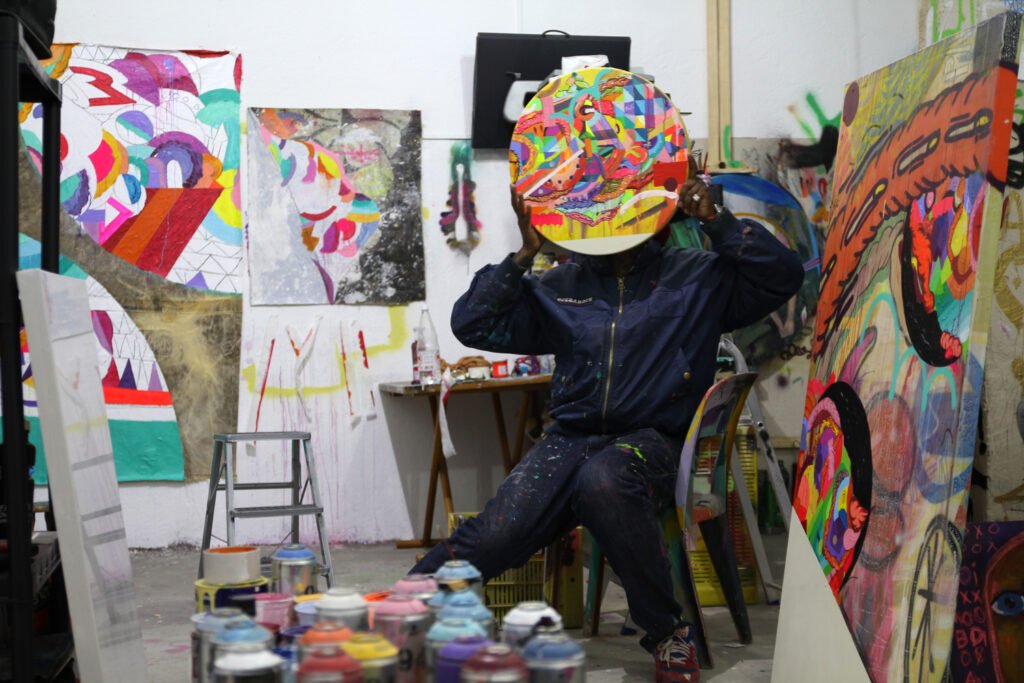
Gestalt graffiti therapy
Exploring presence, perception, and expression through urban art practice, gestalt graffiti therapy is an experiential, arts-based approach that integrates principles of gestalt psychotherapy with graffiti and urban art methodologies. The work focuses on awareness in the present moment, direct expression, and the dynamic relationship between self, environment, and action.
Developed as an accessible framework for individuals with lived experience of, or proximity to, graffiti and urban art culture, the programme offers a structured yet open space for exploring personal narrative, embodied awareness, and creative expression through spray paint, mark-making, and spatial intervention.
Rather than treating art as outcome, the process emphasises contact: with materials, with space, with others, and with the present moment as it unfolds.
Programme overview
The sessions combine theoretical introduction with guided experiential practice. Participants will be invited to engage with:
- Gestalt principles of awareness, contact, and field theory
- Urban mark-making as embodied dialogue
- Spray paint, stencil, and gestural drawing processes
- Spatial awareness and environmental response
- Group reflection and dialogic sharing
- Silent and spoken observation exercises
- Site-based interventions in public or semi-public space (where appropriate)
Work is structured around cycles of awareness and expression, allowing participants to explore how meaning emerges through action rather than interpretation alone.
What you can expect
- A structured introduction to gestalt principles in an applied creative context
- Guided urban art exercises focused on presence and perception
- Individual and group reflective practice
- Working with scale, surface, and environment as active participants
- Opportunities for both controlled and spontaneous mark-making
- A contained, professionally facilitated space for experimentation
Participants are not required to have prior experience in art, therapy, or graffiti practice.
Context and approach
Gestalt graffiti therapy is not a clinical treatment model. It is a reflective, experiential framework that draws on therapeutic principles to support awareness, creative agency, and relational understanding.
The approach is grounded in the understanding that urban space is not passive context, but an active field of interaction. Artistic intervention becomes a way of exploring how perception, action, and environment continuously shape one another.
The work operates at the intersection of art practice, spatial theory, and reflective facilitation.
Costs
£40 per person
£50 per person (private group sessions, minimum group size 6)
£300 flat rate for groups of 1–5
Payment is required in advance.
No refunds.
Access and location
Workshops take place across selected London sites and partner studio locations. Some sessions may include outdoor or semi-public urban environments.
Participants will be informed in advance of specific meeting points and any access considerations.
If you have any access requirements, please contact us prior to booking so that appropriate arrangements can be made.
Total stores showing: 2


Enquiries
For more information please contact:
hello@streetartparis.com
+33 6 52 69 92 40
Upcoming workshops & courses
Spring 2026
Introduction to gestalt graffiti practice
2-day in-person workshop
An introduction to gestalt-informed mark-making in public space. Explore perception, spontaneity and relational awareness through guided exercises and site-based practice.
Summer 2026
Urban awareness and spatial dialogue
Intensive workshop
An in-depth exploration of how we sense, interpret and respond to the urban environment. Develop a dialogue between body, space and surface through immersive, site-responsive work.
Autumn 2026
Gestalt, mark-making and public space
Practitioner module
Designed for those developing an ongoing practice, this module integrates gestalt principles with applied street work. Emphasis is placed on process, ethics and presence within shared environments.